



























Remembering Freddy “Boom Boom” Cannon: Early Rock and Roll Pioneer Dead at 89
Posted by

Megen Gaylord
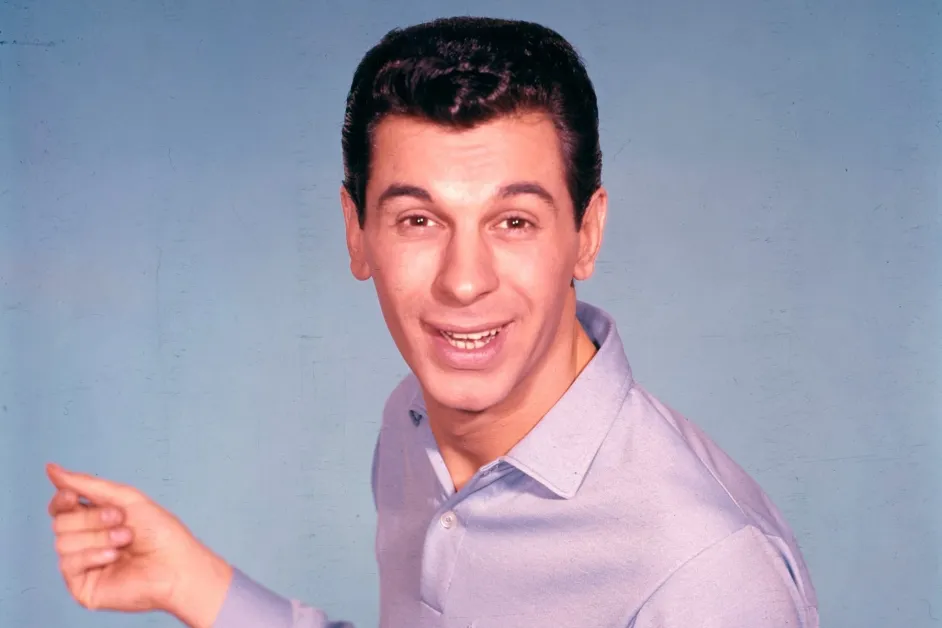
The music world is mourning the loss of a true pioneer. Freddy Cannon, the vibrant rock and pop star whose infectious energy dominated late 1950s and early 1960s radio playlists, has passed away at the age of 89. His passing marks the end of an era for the foundational days of American rock and roll.
According to Billboard and his longtime friend, iHeart Radio’s Tom Cuddy, Cannon died on July 17 in a California hospice facility following a brief battle with cancer. He spent his final days surrounded by his children, Conny and Billy. As a testament to his lifelong passion, Cannon was reportedly still working on music at his Oxnard, California home right up until his death.
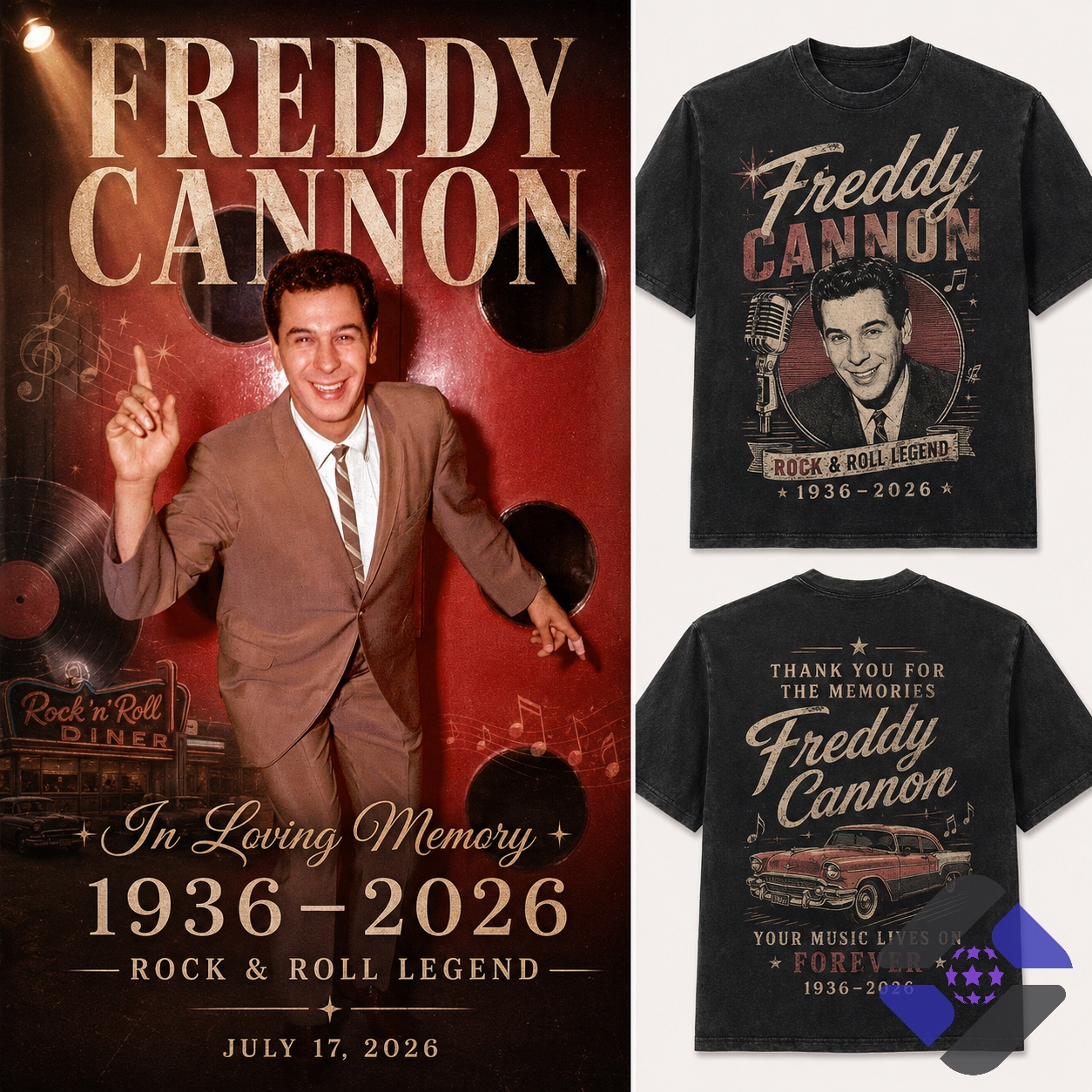
To honor his enduring legacy, fans and loved ones continue to celebrate his contributions to music, and many are commemorating his life with tribute items like the Freddy Cannon Rock & Roll Legend In Loving Memory 1936-2026 T-Shirt.
Early Life and the Origins of "Boom Boom"
Born Frederick Anthony Picariello Jr. on December 4, 1936, in Revere, Massachusetts, Cannon was raised in the nearby town of Lynn. His musical roots were deeply embedded in rhythm and blues; he initially played guitar for the R&B vocal group the G-Clefs, notably contributing to their 1956 record "Ka-Ding Dong," which peaked at No. 24 on the Billboard Hot 100.
It was legendary television host Dick Clark who advised the young musician and his wife, Jeanette, to relocate to Philadelphia, the production hub for ABC-TV's daily American Bandstand. This move proved to be the catalyst for his meteoric rise.
Cannon quickly became famous for the heavy, pounding drum beats that accompanied his tracks, which earned him the affectionate and lasting nickname "Boom Boom".
A Trailblazing Discography and Unmatched Chart Success
Freddy Cannon's solo career was nothing short of explosive. Between 1959 and 1981, he secured a remarkable 23 hits on the Billboard Hot 100.
The Top 10 Billboard Hits
| Song Title | Release Year | Billboard Hot 100 Peak |
| "Tallahassee Lassie" | 1959 |
No. 6 |
| "Way Down Yonder in New Orleans" | 1959/1960 |
No. 3 |
| "Palisades Park" | 1962 |
No. 3 |
-
"Tallahassee Lassie": Cannon co-wrote this iconic track alongside Bob Crewe (who was later inducted into the Songwriters Hall of Fame in 1985) and Frank Slay.
-
"Way Down Yonder in New Orleans": This track was a rock and roll reinvention of a classic song originally dating back to 1922. It was also a massive international success, hitting No. 3 on the Official UK Singles Chart. Interestingly, on this release and three others, his first name was spelled "Freddie" rather than "Freddy".
-
"Palisades Park": Written by Chuck Barris, who later became famous as the host of The Gong Show, this song remains one of Cannon's most recognizable anthems.
Cannon's success extended well beyond singles. He released a total of 16 albums throughout his career, beginning with The Explosive! Freddy Cannon in 1960 and concluding with Boom Boom Rock ‘n’ Roll: The Best of Freddy Cannon in 2009. His debut album was a historic achievement in the United Kingdom, reaching No. 1 on the Official UK Albums Chart in March 1960. This milestone made him only the fourth rock and roll artist to top the UK album chart, following in the footsteps of Bill Haley & the Comets, Elvis Presley, and Tommy Steele.
Television Royalty and Pop Culture Impact
If there was one artist who epitomized the early days of televised music, it was Freddy Cannon. He holds the all-time record for the most appearances on Dick Clark’s American Bandstand, performing on the show an astounding 110 times.
His television presence was ubiquitous. Throughout the golden era of rock, he shared the stage and collaborated with musical titans, including Chuck Berry, Fats Domino, Little Richard, Chubby Checker, Jerry Lee Lewis, Bo Diddley, Connie Francis, and Brenda Lee.
His television credits include:
-
Shindig
-
The Midnight Special
-
Hullabaloo
-
Where the Action Is (from which he scored a top 15 hit in 1965 with the theme song "Action")
-
Sha Na Na
His final entry on the Hot 100 came in 1981 with the collaborative track "Let’s Put the Fun Back in Rock N Roll," featuring Dion’s backing group, The Belmonts. Later in life, in 2011, Cannon co-authored a biography with Mark Bego aptly titled Where the Action Is. His music also found new life in modern cinema, featuring in films like George Clooney’s 2002 directorial project Confessions of a Dangerous Mind and the 2011 blockbuster X-Men: First Class.
Renowned author Stephen King was heavily influenced by Cannon's music, mentioning the rocker in four of his books and recalling, "On a Webcor turntable growing up I played my 45s by Elvis, Chuck Berry and Freddy Cannon".
A Legacy Etched in Covers and Tributes
The brilliance of Cannon's hit singles is further evidenced by the wide array of artists who have covered them over the decades.
-
"Tallahassee Lassie" Covers: Reinterpreted by Jan & Dean on their 1963 album Surf City and Other Swingin’ Cities, by the Peter Green edition of Fleetwood Mac on Live at the BBC (1995), and by The Rolling Stones on the 2011 re-release of Some Girls. The Beach Boys also included an interpolation of the song in their track "Talk to Me".
-
"Palisades Park" Covers: The Beach Boys featured this track on their 1976 Billboard 200 top 10 album, 15 Big Ones. Punk rock legends the Ramones included it on their 1989 album Brain Drain, and it was also recorded by Shelley Fabares and Gary Lewis & the Playboys.
-
"Way Down Yonder in New Orleans" Covers: Cannon's rocking revival inspired versions by Pete Fountain, Jan & Dean, and Merle Haggard. Harry Connick Jr. even performed the tune during A Concert for Hurricane Relief on NBC in 2005.
Remembering the Man Behind the Music
Following the news of his passing, the music community poured out their grief and admiration on social media. Johnny Rock and Roll Radio took to Facebook to declare, "Rock and Roll has lost one of its true pioneers".
Rich Koz, famous for his television persona Svengoolie, shared a touching memory:
"What a sad day — our dear friend Freddy ‘Boom Boom’ Cannon has passed away. From the time we got a cold call from him saying he loved our show and had written a song about me to becoming good friends and spending time with him on and off stage, his talent, personality, and kindness will be missed."
Gerry Rockey Seader, who drummed for Cannon for over 45 years, posted a heartbreaking tribute:
"My friend, my mentor — the man that taught me how to play HARD on every show... I would not be the drummer and person I am without his influence. Thank you my friend for all the great songs you recorded and your friendship. I will miss you. My heart is broken. God be with you Freddy and say hello to Jeannette in heaven, you are now with her for eternity in paradise."
Cannon is survived by his children, Conny and Billy; his sister, Mary Lou; his son-in-law, Jim; his daughter-in-law, Beth; five grandchildren; and seven great-grandchildren. He was preceded in death by his high school sweetheart and wife, Jeanette, who passed away on September 25, 2024, and his son, John, who died on April 13, 2026.
Reflecting on her father's immense impact, his daughter Conny Weber stated:
"We would like to thank everyone for their love and support throughout our dad’s life. He will be remembered as a rock and roll icon. His music will live forever in our hearts."
Frequently Asked Questions (FAQs)
1. How did Freddy Cannon get his nickname "Boom Boom"? Freddy Cannon was nicknamed "Boom Boom" because of the heavy, pounding bass drum sounds that were a signature element of his hit records.
2. What were Freddy Cannon's biggest hit songs? He had three major top 10 hits on the Billboard Hot 100: "Tallahassee Lassie" (No. 6 in 1959), "Way Down Yonder in New Orleans" (No. 3 in 1960), and "Palisades Park" (No. 3 in 1962).
3. What television record did Freddy Cannon hold? Cannon holds the record for the most guest appearances on Dick Clark’s famous music television show American Bandstand, appearing a total of 110 times.
4. Did Freddy Cannon play in any other bands before going solo? Yes, before achieving massive solo fame, his musical background included playing guitar for the rhythm and blues group the G-Clefs, particularly on their 1956 Billboard Hot 100 hit, "Ka-Ding Dong".
5. How many albums did Freddy Cannon release during his career? Throughout his extensive musical career, Freddy Cannon released a total of 16 albums, starting with The Explosive! Freddy Cannon in 1960 and ending with Boom Boom Rock ‘n’ Roll: The Best of Freddy Cannon in 2009.

